
I’ve spent my entire life obsessed with colors. So much so that I started using a form of color therapy long before I ever knew it existed.
By the time I started learning about color theory and color psychology, I had been coloring my hair for at least 5 years.
I was becoming more interested in unique hair colors beyond the burgundies, browns, and blondes I had in the past.
And I was extremely stressed out by the pressures of ad school.
Note: Ad school or portfolio school refers to a 2-year program I completed after college where aspiring art directors, designers, and copywriters learned to build our portfolios.
Experimenting with my hairstyles has always been an instant mood booster.
Around this same time, I began to wonder if it was possible to use my hair colors to influence how I feel about myself the same way brands influence their audiences.
If I wore bold or powerful colors, would I feel more confident about my work?
If I wore happy colors, would I remember to do things that gave me joy?
If I wore relaxing colors, would I learn how to sit down somewhere?
(That last one came to me years later.)

After a lot of trial and error, I learned not only was it possible to influence how I felt, but it was more effective than I expected!
It worked because every time I looked in the mirror, I got a visual reminder of the feelings I wanted to feel and the motivation I needed to do things that helped me get there.
At the time that meant actively trying to
- speak more confidently even when I was nervous,
- Be proud of my ideas because they were mine,
- and remember I was still learning.
I would later learn I also needed to detach myself from my work. I’m kind of sensitive and far too many people genuinely believe having thick skin can be taught.
The funny thing is whenever I wore one of these unique hair colors, at least one person always asked, “What does this color say about you?”
From their point of view, I was changing my hair colors to express something about myself.
From my point of view, the self-expression was in the hairstyles. The colors were for me.
Over the years, every new hair color continued to be a way for me to explore how I cared for and about myself.

What is Color Psychology?
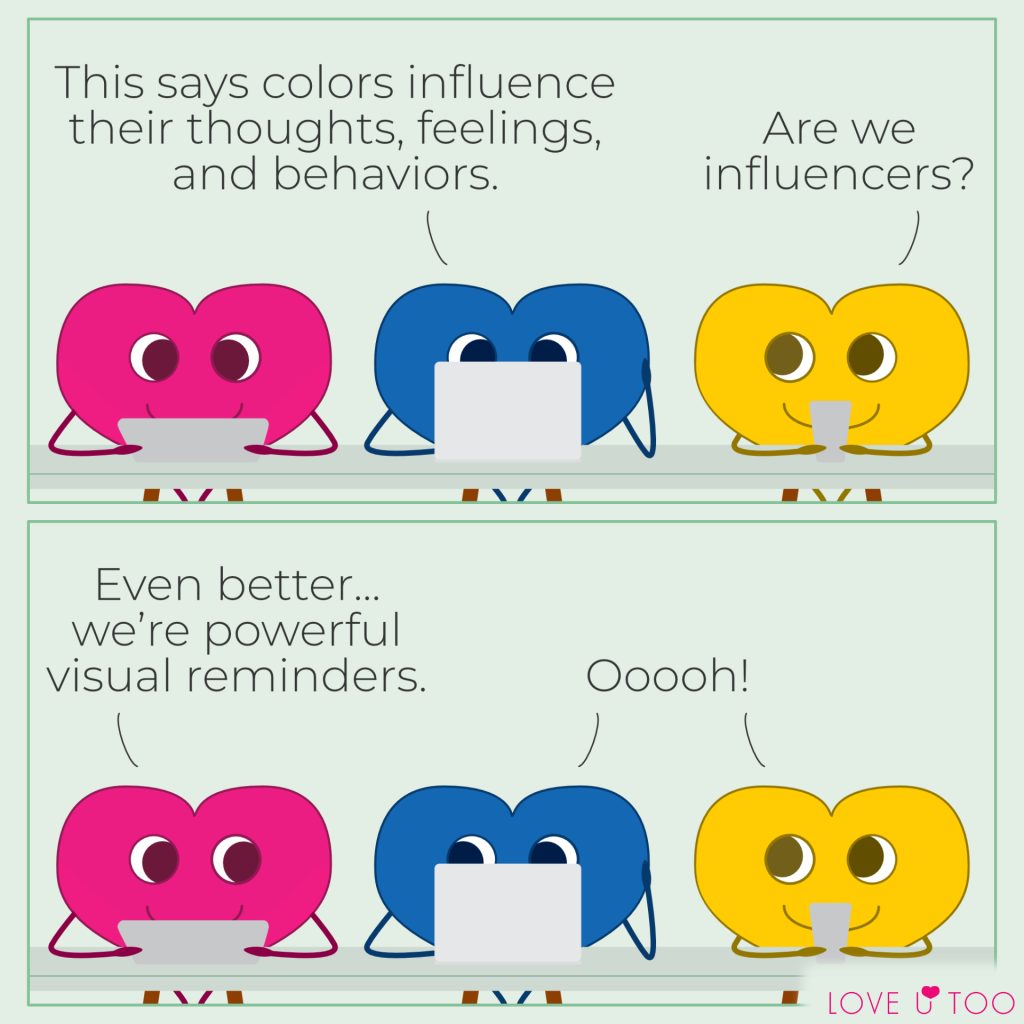
Color psychology is the study of how colors influence our thoughts, feelings, and behaviors.
Brand marketers, product designers, and advertising creatives like myself frequently rely on it to influence how people feel about our client’s brands and products.
But there are other ways colors affect how we think, feel, and behave without us realizing it.
The colors in the sky tell us the time of day and changes in weather conditions. The color of outdoor plants indicates changes in the seasons.
The colors in traffic signs and signals tell us what we might need to do to drive safely.
The colors an organization uses tell us who it’s for and what it might offer. The colors used by certain groups of people tell us about their culture and history.
How I Use Color Therapy With Self-Acceptance
For this reason, I believe color therapy works best when we think of it as establishing visual reminders.
These visual reminders help us feel how we want to feel about ourselves and our lives. And they’re most effective when we use them intentionally.
You might choose a color to wear for important meetings because it reminds you to speak confidently and with authority. You could also practice for big presentations wearing it to boost your confidence ahead of time.
You might choose another color to decorate your bedroom because it reminds you that you’re allowed to rest. You could add it to your desk decor as a reminder to take breaks and stop working through lunch.
You might choose an additional color for all your notebooks, sticky notes, and writing utensils because it reminds you to be kind to yourself throughout the workday.
You could even add it to your bathroom so you remember to be kind to yourself before the day begins.
The more you can integrate these colorful reminders into your regular routines, the sooner you’ll start to feel the effects of them.
Just remember, acquiring your colorful visual reminders doesn’t have to be expensive or complicated.
It can be as simple or inexpensive as changing the background on your phone’s lock screen. It can be as complex or expensive as redecorating your home office.
I like to “shop my house”.
With each new color we explore, you’ll notice it’s something I do often. Because I just really love colors there’s rarely a shortage of things to choose from.
And when buying new things, I don’t restrict myself to colors I’ve assigned meaning to.
Instead, I buy items in whatever color(s) I’m most drawn to. Then I figure out where it fits into my routine best—if it fits at all.
I’m sharing this so you know you don’t have to be strict with how you use your colors.
There’s power in surrounding ourselves with colors just because they make us happy. Our bodies tend to know what we need, we just have to get out of our way to see it!
I also want you to know my goal isn’t to convince you to buy something new every time we discuss a new color.

Why We Need Color Therapy
With that said, it’s important to remember we all have unique associations with each color based on our life experiences, cultures, locations, social groups, genders, and ages.
It doesn’t matter what connotations a color might have if it doesn’t mean that to you.

What does matter is
💕 how you feel,
💕 how you want to feel,
💕 and how a color (or set of colors) can help you get there.
You just need to be willing to figure out what self-acceptance looks like for you and what helps you get closer to it.
To be open to evaluating your relationship with the colors around you.
And to remember that change comes when you get out of your comfort zone.
That’s why I don’t focus on helping you figure out what your favorite color might say about your needs or how you feel.
Most of us already surround ourselves with our favorite colors. While having a color we know will boost our spirits is a great resource, it’s already familiar to us.
Being open to introducing other colors into your routines means they’ll actually stand out to you. It also means they’ll be more impactful!
Remember, self-acceptance takes practice—and so does color therapy.
Want to learn more about the colors featured in this blog?
Join the Color Library to gain access to in-depth self-acceptance and color therapy advice, plus receive new digital wallpaper every month.

Leave A Comment Below:


